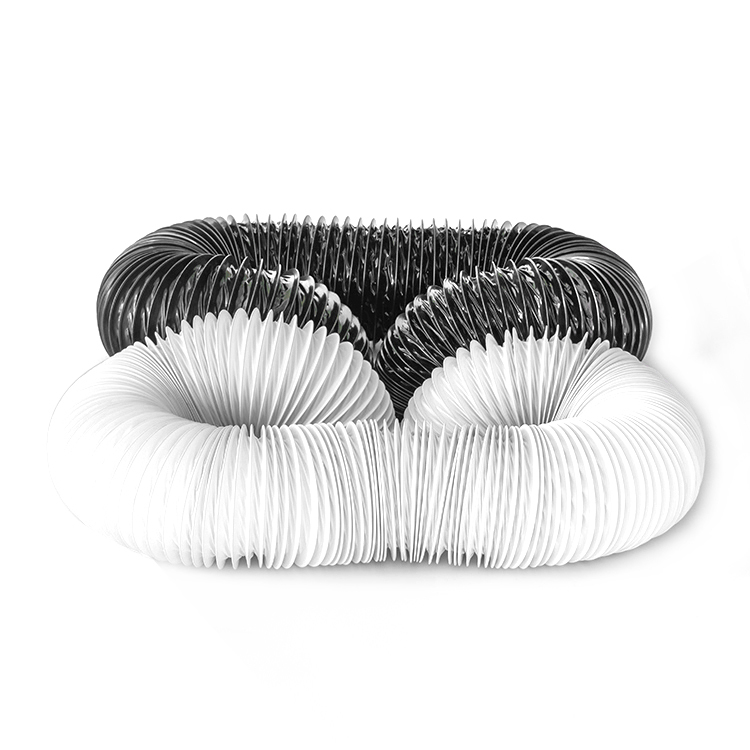
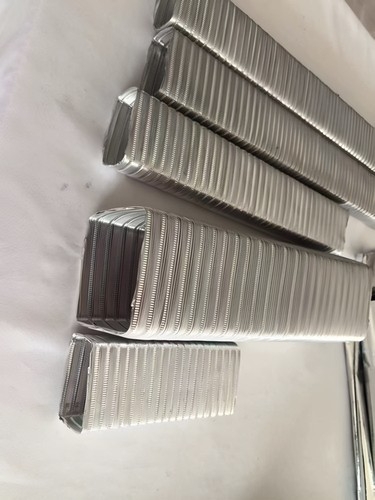
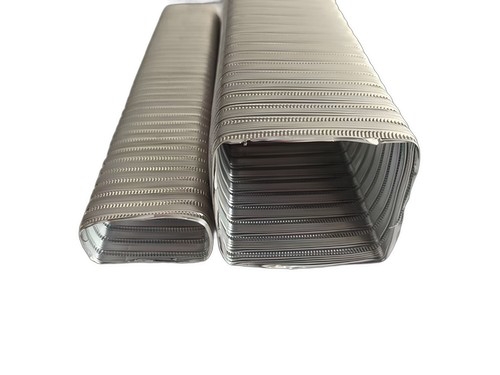
Aluminium Flexible Duct-ALU

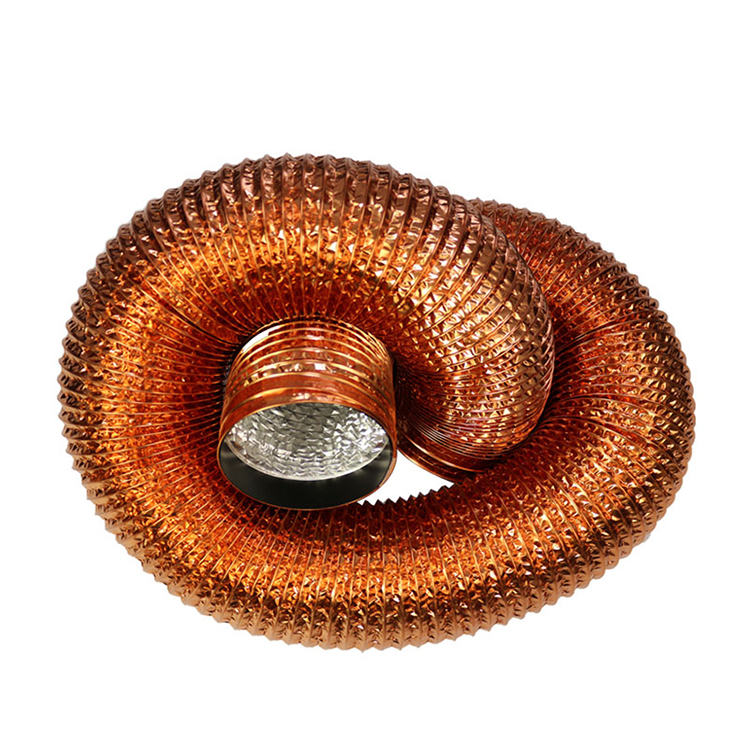
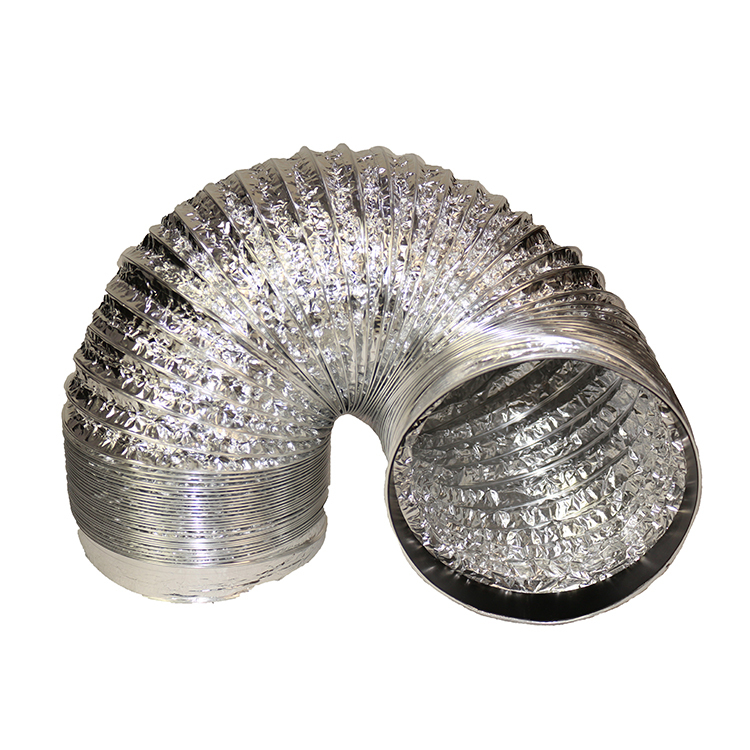
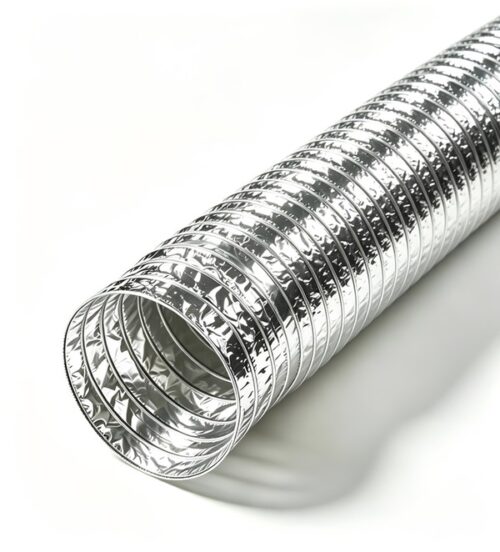
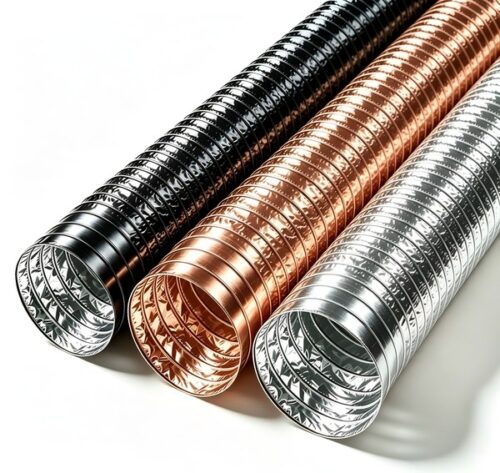
A lightweight, uninsulated flexible duct made from laminated aluminum foil, polyester film and spiral steel-wire reinforcement, designed for supply, return and general exhaust-air connections in low- and medium-pressure HVAC systems.

ALU 1.0ALU 2.0ALU 3.0
Product TypeUninsulated Aluminum Flexible Duct
Diameter Range45–605 mm (2–24 inches)
Standard Length10 m
Operating Temperature−30°C to +120°C
Maximum PressureUp to 3500 Pa (ALU 3.0)
Maximum Air Velocity30 m/s
Fire PerformanceFire-retardant construction

Description

Lightweight, flexible air routing for HVAC systems

              The laminated wall forms a flexible air passage, while the spiral wire helps maintain the circular cross-section

and allows the duct to bend around obstacles. The duct can be compressed for economical storage and transportation

and extended during installation.

It is designed primarily for low- and medium-pressure ventilation, air-conditioning supply and return air, and general

exhaust connections where thermal insulation is not required.

1 Ply Aluminum + 1 Ply Polyester / 2 Ply Aluminum + 1 Ply Polyester

Size (mm)Wire Distance (mm)Operating Pressure (Pa)Air Velocity (m/s)CertificatePacking
85 mm (3″)282500 / 300030SGS 


Plastic Bag
+
Carton Box

102 mm (4″)352500 / 300030SGS
127 mm (5″)402500 / 300030SGS
152 mm (6″)402500 / 300030SGS
160 mm (6″)402500 / 300030SGS
165 mm (6″)402500 / 300030SGS
203 mm (8″)452500 / 300030SGS
254 mm (10″)452500 / 300030SGS
305 mm (12″)452500 / 300030SGS
315 mm (12″)452500 / 300030SGS
356 mm (14″)502500 / 300030SGS
407 mm (16″)502500 / 300030SGS
457 mm (18″)502500 / 300030SGS
508 mm (20″)502500 / 300030SGS

Operating Principle

A fan or air-conditioning unit creates a pressure difference across the duct, causing air to flow through the internal passage.

The spiral wire supports the flexible wall and helps prevent excessive deformation under the rated operating pressure.

The duct does not generate airflow itself. Actual airflow depends on fan static pressure, duct diameter, duct length,

degree of extension, number and radius of bends, joint sealing and total system resistance.

Product Construction

  • Aluminum foil:
    forms the outer surface and provides heat-reflective and flame-retardant properties.
  • Polyester film:
    improves flexibility, tear resistance and dimensional stability.
  • Spiral steel wire:
    maintains the circular shape and supports flexible bending.
  • Bonded or laminated overlap:
    joins the layers and improves air tightness.
  • ALU 1.0, ALU 2.0 and ALU 3.0

    All three construction grades are non-insulated flexible ducts.

    ALU 1.0

    2500 Pa

    1 Ply Aluminum + 1 Ply Polyester

    ALU 2.0

    3000 Pa

    2 Ply Aluminum + 1 Ply Polyester

    ALU 3.0

    3500 Pa

    4 Ply Aluminum + 2 Ply Polyester

    SpecificationALU 1.0ALU 2.0ALU 3.0
    Construction1 Ply Aluminum + 1 Ply Polyester2 Ply Aluminum + 1 Ply Polyester4 Ply Aluminum + 2 Ply Polyester
    Insulation MaterialNon InsulatedNon InsulatedNon Insulated
    Insulation DensityN/AN/AN/A
    Insulation ThicknessN/AN/AN/A
    R ValueN/AN/AN/A
    Max Operating Pressure2500 Pa3000 Pa3500 Pa
    Max Air Velocity30 m/s30 m/s30 m/s
    Operating Temperature−30°C to +130°C−30°C to +130°C−30°C to +130°C
    Fire RatingFire RetardantFire RetardantFire Retardant

    Supply, return and general exhaust connections

    Suitable for common low- and medium-pressure ventilation applications where thermal insulation is not required.

    Residential HVAC

    Residential air-conditioning systems and supply- or return-air terminals.

    Commercial Ventilation

    Hotels, hospitals, offices and other commercial ventilation systems.

    Fresh-Air Connections

    Flexible routing for fresh-air systems and confined ceiling spaces.

    General Exhaust

    Bathroom and general indoor exhaust-air connections.

    Factory & Warehouse

    Workshop ventilation, warehouse air circulation and non-corrosive air transfer.

    Equipment Connections

    Connections between fans, plenums, dampers, grilles and equipment-cooling outlets.

    Fan or HVAC unit → ALU flexible duct → damper or plenum box → air grille

    ALU flexible duct applications in residential and commercial ventilation systems

    Use the duct in the intended environment

    Suitable for

    • Fresh air
    • Conditioned supply air
    • Indoor return air
    • General exhaust air
    • Non-corrosive gases
    • Equipment-cooling air

    Not normally recommended for

    • Heavy grease-laden kitchen exhaust
    • Open flames or direct flue-gas exhaust
    • Strong acids, alkalis or corrosive gases
    • Highly abrasive dust or particles
    • Flammable or explosive gases
    • Permanent outdoor rain and strong UV exposure
    • Cold-air systems requiring condensation control
    • Fire-rated penetrations requiring rigid fire-resistant ductwork
    • Typical production process

      1. Lamination of aluminum foil and polyester film
      2. Slitting of the laminated material
      3. Spiral winding
      4. Insertion of the steel-wire reinforcement
      1. Bonding or heat-sealing of the overlap
      2. Cutting to the specified length
      3. Compression
      4. Plastic-bag and carton packaging

      Standards and Certification

      Relevant documentation demonstrating conformity with EN 13180 is available for ALU flexible ducts. This standard primarily specifies the dimensions, tolerances, mechanical performance and related testing requirements for flexible ducts used in building ventilation systems.

      IMDUCT ALU flexible ducts use 8079 aluminum foil as one of their primary materials, supported by the corresponding EU RoHS material test report.

      Install extended, supported and correctly sealed

      The duct should be installed in a reasonably extended condition. Excessive compression, sharp bends and sagging increase pressure loss and reduce airflow.

      1. Select the duct diameter and ALU grade according to airflow and pressure requirements.
      2. Check the duct for tears, delamination or exposed wire.
      3. Measure the installation route and avoid excessive length.
      4. Extend the duct carefully without dragging it across sharp surfaces.
      5. Cut the laminated wall with scissors and cut the wire with wire cutters.
      6. Fit the duct over the equipment collar or connecting spigot.
      7. Seal the joint with suitable aluminum foil tape.
      8. Secure it mechanically with a stainless-steel clamp or approved cable tie.
      9. Extend and straighten the duct as much as practical.
      10. Support the duct with wide straps or suitable brackets.
      11. Start the system and check leakage, vibration, noise and airflow.

      Installation Precautions

      • Do not operate in a heavily compressed condition.
      • Avoid unnecessary S-shaped routing.
      • Use gradual bends with a large bending radius.
      • Keep away from sharp metal edges.
      • Do not suspend with thin wire.
      • Use tape for sealing and clamps for fixing.
      • Do not select a duct smaller than the equipment connection.
      • Do not allow the duct to support fans or grilles.
      • Add sufficient support for long horizontal runs.
      • Evaluate condensation risk when carrying cold air.
      • Do not exceed rated temperature, pressure or air velocity.
Go to Top