▶ Additional information
Diameter (inches) : 2″-25″
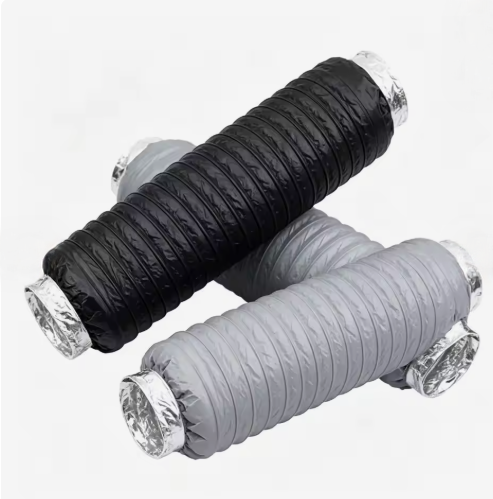
Insulated Wrap : Polyester
Packing : 5/6/7.5/10meters Length in one carton box
▶ Basic Information
▶ Contact Information
Email: sales04@ducting.cn
Whatsapp: +86 139 1836 0649
Email: sales04@ducting.cn
Whatsapp: +86 139 1836 0649

Looking for high-performance HVAC ducting that combines flexibility, insulation, and durability? The 150mm insulated flexible ducting from HVAC is engineered to deliver consistent airflow, thermal efficiency, and long-lasting performance in both residential and commercial systems.
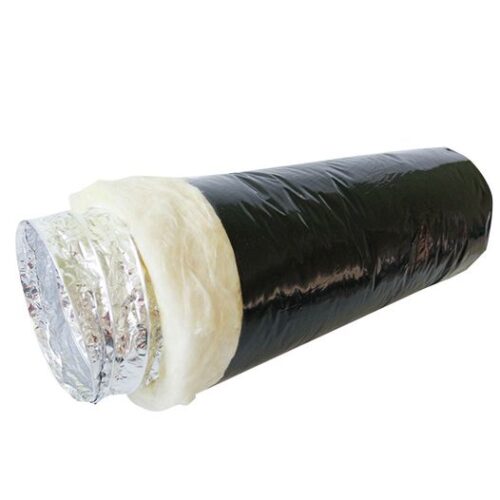
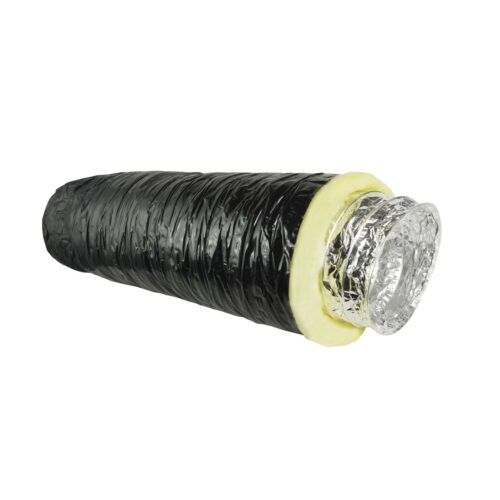
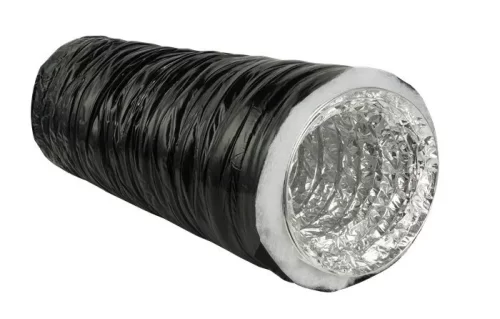
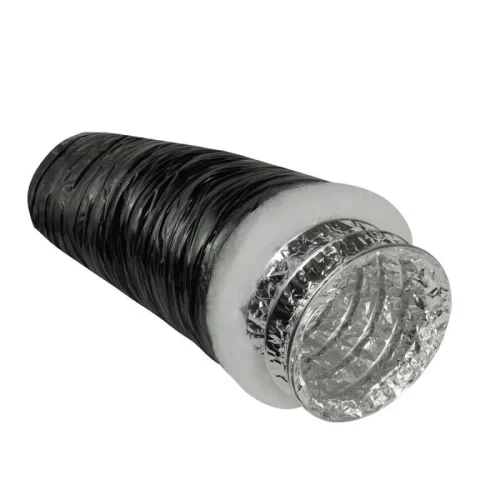
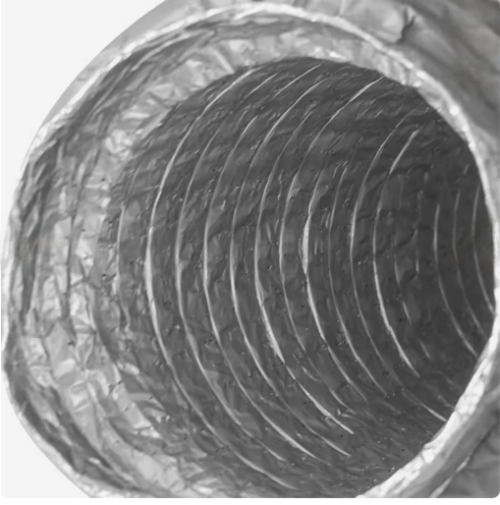
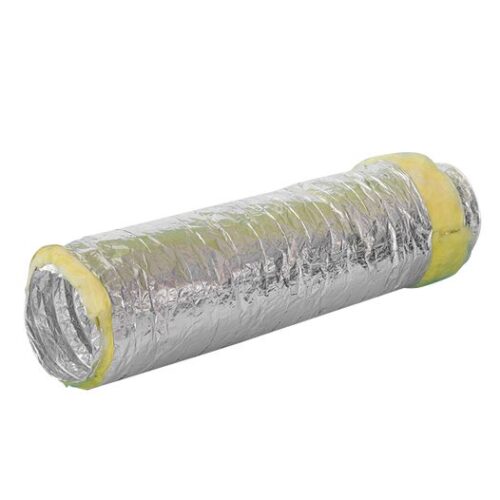
This flexible insulated ducting hose 150mm is constructed with a double-layer aluminum foil inner duct, 25–30mm polyester fiber insulation, and a reinforced aluminum laminated outer jacket.
This triple-layer structure delivers reliable R-value performance, mechanical strength, and ease of installation across various ventilation scenarios.
Double-Layer Aluminum Foil Core:

Polyester Insulation Layer:
Reinforced Foil Outer Jacket:
Flexible & Compressible:
Temperature Range:
Pressure Capability:
Multiple R-Values:
| Item | Specification |
| Outer Sleeve | Reinforced Aluminum |
| Insulation Material | Polyester, Thickness: 25mm / 30mm |
| Polyester Density | Density: 100–750 g/m³ |
| Inner Duct | Double-layer Aluminum |
| Fiberglass(option) | Thickness: 25mm / 30mm |
| 12kg/m3,16kg/m3,20kg/m3,24kg/m3,32kg/m3 | |
| Thermal Resistance | R4.2, R6, R8 (optional insulation thickness) |
| Maximum Air Velocity | 30 m/s |
| Working Pressure | Up to 3000 Pa |
| Available Diameter | 10″ (254mm), other sizes from 2″–25″ |
| Temperature Range | -30°C to +150°C |
| Steel Wire Diameter | 0.6–2.5 mm (carbon steel spiral) |
| Standard Length | 10 m (customizable upon request) |
| Ease of Cutting | No special tools required; easy to connect |
| Fire & Pressure Testing | Passed fire resistance and pressure tests |
| Flexibility | Can be bent in any direction (small bending radius) |
| Space Saving | Compression ratio of 10:1 |
| Installation | Easy installation; long service life |
In HVAC ducting, both reinforced aluminum foil and single-layer aluminum foil are widely used as outer jackets or inner linings.
Both foil types are effective. Choose reinforced foil for added durability or single-layer foil for flexibility and ease of installation—based on your project needs.
| Property | Fiberglass Insulation | Polyester Insulation |
| Material Composition | Made from spun glass fibers (glass wool) | Made from thermally bonded polyester fibers |
| Thermal Performance | High insulation efficiency; common in R6–R8 rated ducts | Moderate to high insulation, suitable for R4.2–R6 |
| Density Range | 12–32 kg/m³ | 100–750 g/m³ |
| Skin Irritation | Can cause itchiness or irritation upon contact | Non-irritating and safe to handle without gloves |
| Acoustic Properties | Excellent sound absorption capability | Good sound absorption, less than fiberglass |
| Fire Resistance | Inherently fire-resistant, rated A2 in many systems | Good fire behavior but depends on bonding agents |
| Environmental Impact | Contains glass; not biodegradable | Recyclable and more environmentally friendly |
| Recommended Application | Commercial HVAC systems with strict insulation needs | Residential or light commercial systems; user-safe installs |
Polyester insulation flexible duct offers a cleaner handling experience and stable mechanical performance,
making it a practical choice for many HVAC installations—especially in environments where ease of installation
and low irritation are important.
While fiberglass may offer a slightly higher raw R-value, both insulation types perform effectively in their respective
applications depending on project priorities such as thermal resistance, durability, and user handling comfort.

A 150mm flexible duct typically supports up to 100–140 CFM (cubic feet per minute), depending on:
CFM capacity drops with longer runs or excessive turns, so always consult a duct sizing calculator or HVAC engineer when designing airflow systems.