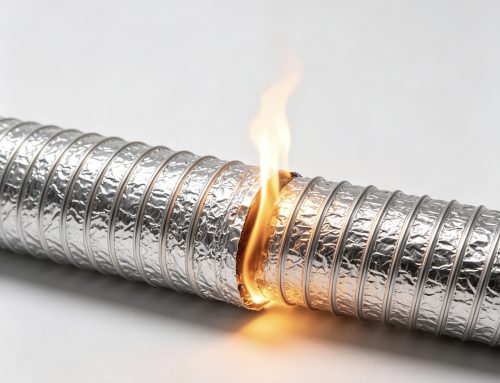
Comprehensive comparison of PVC, PU, and Silicone flexible ducting materials. Learn key differences in temperature resistance, chemical compatibility, applications, and cost to select the optimal hose for your HVAC or industrial ventilation system.
Introduction
Choosing the right flexible duct hose for your application is critical for system performance, safety, and cost-effectiveness. PVC, PU (Polyurethane), and Silicone are three of the most common materials used in flexible ducting, each offering distinct advantages depending on your specific requirements.
This comprehensive guide compares these materials across key performance parameters, helping wholesalers, distributors, and end-users make informed decisions for HVAC, industrial ventilation, and specialized applications.
Material Overview
PVC (Polyvinyl Chloride) Ducting
PVC flexible ducting is a cost-effective solution widely used in general ventilation, fume extraction, and material handling applications.
- Temperature Range: -10°C to +70°C (intermittent up to +90°C)
- Characteristics: Good chemical resistance, flame retardant options available, economical
- Common Applications: General ventilation, welding fume extraction, dust collection, air conditioning systems
PU (Polyurethane) Ducting
PU ducting offers superior abrasion resistance and flexibility, making it ideal for demanding industrial applications involving particle-laden air streams.
- Temperature Range: -40°C to +90°C (short-term up to +120°C)
- Characteristics: Excellent abrasion resistance, high flexibility, lightweight, oil resistant
- Common Applications: Pneumatic conveying, woodworking dust extraction, vacuum cleaning, granule transfer
Silicone Ducting
Silicone flexible ducting provides exceptional heat resistance and chemical stability, suitable for high-temperature and specialized industrial applications.
- Temperature Range: -70°C to +260°C (continuous), short-term up to +300°C
- Characteristics: Superior heat resistance, excellent chemical stability, UV resistant, non-toxic
- Common Applications: High-temperature ventilation, laboratory exhaust, food processing, pharmaceutical applications, engine testing
Detailed Comparison Table
| Property | PVC Ducting | PU Ducting | Silicone Ducting |
|---|---|---|---|
| Temperature Range | -10°C to +70°C | -40°C to +90°C | -70°C to +260°C |
| Abrasion Resistance | Good | Excellent | Good |
| Chemical Resistance | Good (acids, alkalis) | Very Good (oils, solvents) | Excellent (broad spectrum) |
| Flexibility | Good | Excellent | Very Good |
| UV Resistance | Fair to Good | Good | Excellent |
| Food Grade Options | Available | Available | Available (FDA compliant) |
| Flame Retardant | Standard feature | Available | Available |
| Cost Level | $ (Economical) | $$ (Moderate) | $$$ (Premium) |
Key Selection Criteria
1. Operating Temperature
Temperature is often the primary deciding factor:
- Below 70°C: PVC is typically sufficient and most economical
- 70°C to 120°C: PU offers better performance with wider temperature tolerance
- Above 120°C: Silicone is the only viable option for continuous high-temperature operation
2. Material Being Conveyed
Consider what will flow through the duct:
- Air/Gases only: All three materials work; choose based on temperature and cost
- Dust/Particles: PU excels due to superior abrasion resistance
- Oil mist/Fumes: PU or Silicone (better oil resistance than PVC)
- Corrosive chemicals: Silicone offers broadest chemical compatibility
- Food/Materials requiring hygiene: Food-grade Silicone or PU
3. Environmental Conditions
External factors affecting duct life:
- Outdoor/UV exposure: Silicone provides best UV resistance
- Frequent flexing/movement: PU maintains flexibility in cold temperatures
- Abrasive environment: PU’s abrasion resistance extends service life
4. Regulatory Requirements
Industry-specific certifications may dictate material choice:
- Food processing: FDA-compliant materials (Silicone or PU)
- Pharmaceutical: USP Class VI or similar biocompatibility standards
- Mining/Industrial: Flame retardant and anti-static properties
Application-Specific Recommendations
HVAC Systems
Recommended: PVC or PU
For standard heating, ventilation, and air conditioning applications with moderate temperatures (<70°C), PVC ducting provides excellent value. PU is preferable when the system experiences frequent movement or operates in colder environments.
Woodworking & Dust Collection
Recommended: PU
The abrasive nature of wood chips and sawdust makes PU the optimal choice. Its superior abrasion resistance significantly extends hose life compared to PVC or Silicone.
Welding Fume Extraction
Recommended: PVC (standard) or Silicone (high-heat)
Standard welding applications work well with flame-retardant PVC. For robotic welding or high-heat processes, Silicone handles elevated temperatures better.
High-Temperature Processes
Recommended: Silicone
Engine testing, furnace ventilation, hot air handling, and other high-temperature applications (>150°C) require Silicone’s exceptional thermal stability.
Pneumatic Conveying
Recommended: PU
When transporting granules, powders, or pellets pneumatically, PU’s combination of abrasion resistance, flexibility, and static dissipation options makes it ideal.
Food & Pharmaceutical
Recommended: Silicone (premium) or PU (cost-effective)
Both materials offer food-grade options. Silicone provides superior cleanability and temperature tolerance for CIP (Clean-in-Place) processes, while PU offers a more economical solution for less demanding applications.
Cost Considerations
While initial cost is important, total cost of ownership should guide your decision:
- PVC: Lowest upfront cost, suitable for non-demanding applications
- PU: Moderate cost, extended life in abrasive applications reduces replacement frequency
- Silicone: Higher initial investment, but unmatched performance in extreme conditions justifies the cost
Choosing a cheaper material that fails prematurely often costs more in downtime, replacement labor, and system inefficiency.
Conclusion
Selecting the right flexible duct hose requires balancing multiple factors: temperature, material compatibility, environmental conditions, regulatory requirements, and budget.
Quick Selection Guide:
- Choose PVC for general ventilation, cost-sensitive projects, temperatures below 70°C
- Choose PU for abrasive applications, pneumatic conveying, cold environments, woodworking
- Choose Silicone for high-temperature processes, chemical resistance, food/pharma applications, outdoor use
Our technical team can help you evaluate your specific requirements and recommend the optimal solution. Contact us for personalized guidance and competitive pricing on PVC, PU, and Silicone flexible ducting products.